Space is Hard
If you pay any attention to space industry news, something you’re almost certain to hear sooner or later is that “space is hard.” Maybe it’s after a rocket explodes, maybe it’s after a robotic moon lander crashes. It’s actually pretty common to hear, probably because it feels like sage wisdom, an easy way to paint any number of hugely complex issues, but doesn’t actually say anything of substance.
When it comes to putting people into space, ‘space is hard’ in several different ways, but one of them is keeping them alive once they get there. In other posts I’ve talked about keeping people alive in space as the bare minimum, the minimum viable product of a space habitat, and the foundation upon which space architects do nearly all of their work. And while it may be the very least you can do as a habitat designer, it’s a frustratingly high bar. A big reason that’s the case is the space environment itself.
When an architect designs a building, one of the first things they’ll do is analyze the site. Site considerations drive a huge number of design decisions, from the building footprint and depth of the foundation to the location of the front door and glazing strategy on each facade. This can be an enormously complex process that gets complicated by the many other drivers shaping the building, not the least of which is the core idea driving the design.
Oftentimes all of space will get grouped together as one big place. Designing for space, especially for people in space, means a specific set of issues to contend with and countermeasures to provide: create a pressurized, breathable atmosphere; combat the effects of microgravity; protect against radiation from both the sun and deep space; stabilize the thermal environment; shield against micrometeoroid and orbital debris strikes.
But as with sites on Earth, there’s more nuance in the space environment and the specific “site” in space makes a big difference for how you design. Just in low-Earth orbit (LEO), the planned destination for the collection of commercial space stations currently in development, orbital parameters like altitude and inclination can have implications for the nature of the space environment encountered. Altitude alone can impact how much atmospheric drag you see as you get lower, a more intense radiation environment as you get higher, an increasing density of orbital debris at certain altitudes, greater numbers of satellites and other spacecraft in LEO, and how much performance is needed from crew and cargo transports to reach you. Suddenly space isn’t such a big place. Not to mention, most of those factors are deeply entangled with the actual configuration of the space vehicle itself.
So while this topic is a bit of a departure from the core discipline of space architecture, understanding it is critical for space architects, just as understanding site characteristics is essential for designing a building, no matter where it is on Earth.
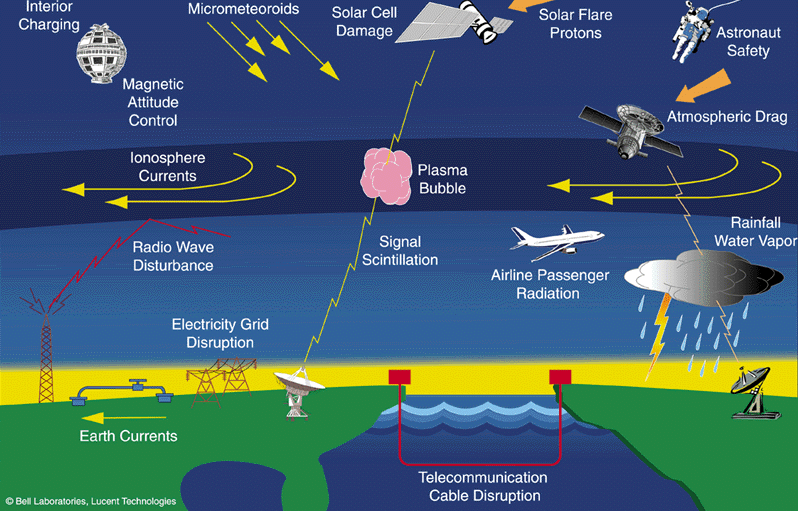
Image: National Academies Press; Bell Laboratories; Lucent Technologies