Design for Shared Views
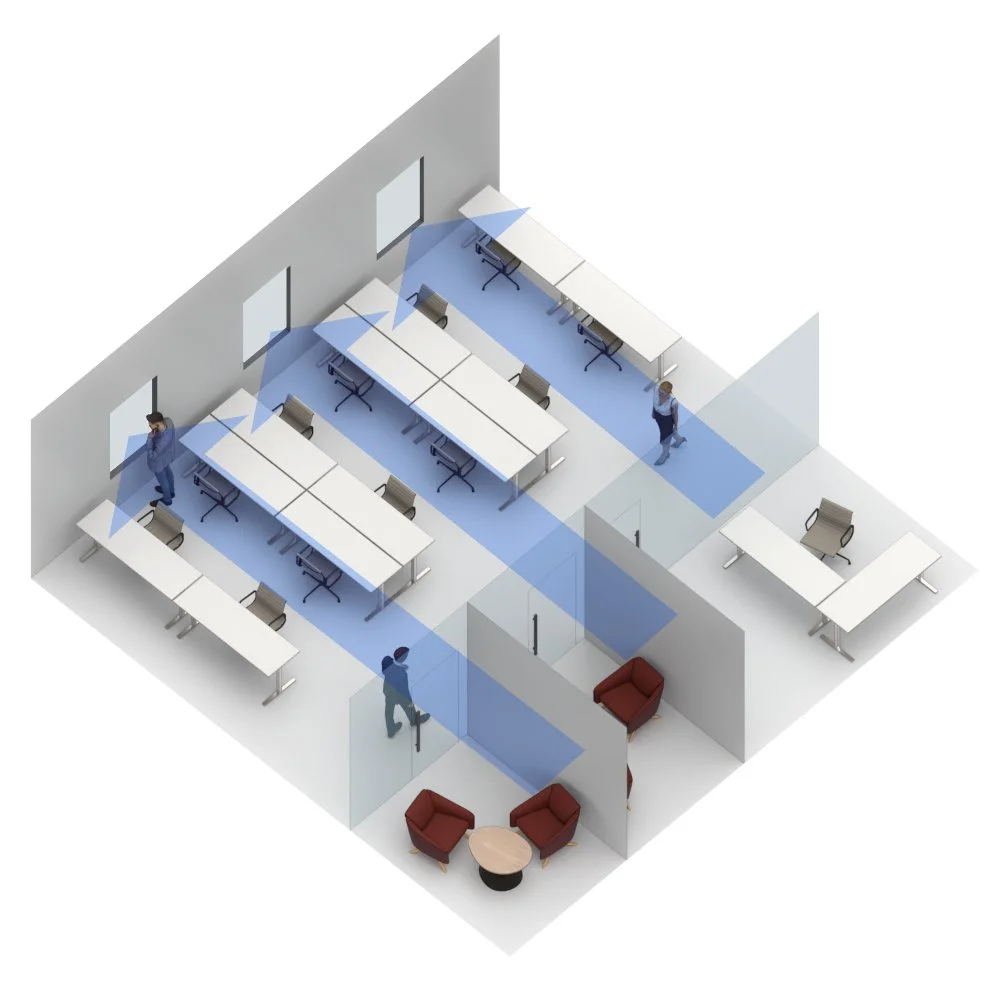
A typical office often locates private rooms at the perimeter of the floor, closing off window views for everyone else. This approach flips that idea and can be applied to a variety of different typologies and situations.
Setting up opportunities for shared views is a subtle architectural strategy that can enhance the quality of an interior with a gentle egalitarian nudge.
In a nutshell, providing shared views means using design and layout to shape user experience around view windows, creating complementary layers with varying degrees of privacy and intimacy. That’s the archispeak way of saying looking out a window shouldn’t prevent everyone else in a room from also having access to the view.
It’s a simple move but one that isn’t always observed. Think of an office floorplan with private offices at the perimeter or, for a space example, the cupola on ISS, which offers amazing views of Earth, but only if you’re physically inside the cupola. It’s the ultimate corner office.
Sometimes we have good reason to prioritize the real estate with prime views. Apartments and condo buildings often move corridors to the interior (the infamous double-loaded corridor), sacrificing views so the units can have unfettered access, which often includes balconies. Restaurants always work to maximize view access in the dining room, trading off a windowless kitchen and back of house. Hospital patient rooms tend to move to the perimeter of the floor, prioritizing daylight and views for the patients rather than the staff — for better or worse; ideally you can do both.
As scale comes down and/or programmatic requirements ease, accommodating everyone becomes easier. I should also note that windows are generally optimized to do one of two jobs: provide access to views or provide access to daylight. A lot of the time we ask them to do both; sometimes they are much more specialized, e.g. skylights are there for daylight, not the view. Regardless of the specific purpose of the window, deliberate management of occupants' relationship to outside should be a top design driver, informed by environmental analysis and aligned with program organization.