
CASE STUDY
Building a Science Economy in Space
Laboratories in Low-Earth Orbit
Design that enables unprecedented discoveries in microgravity science and heralds a new generation of in-space research, development, and manufacturing.
PRACTICE AREA: AEROSPACE
CAPABILITIES:
Market Research
Concept Formulation & Design
Vehicle Configuration
Human Integration
Interior Layout & Design

Many unanswered scientific questions can only be answered through experiments in the microgravity environment of LEO. A microgravity research ecosystem is needed to conduct these experiments.
National LEO Research & Development Strategy
March 2023
The Architecture of World-Class Research Facilities
State of the art laboratory buildings are not just scientists at a bench but multi-use facilities that encourage both formal and informal collaboration. Floor plans are organized to support day-to-day research through zone adjacencies, shared back-of-house utilities, and social amenities that include informal seating, high-quality views, large gathering venues, and kitchenette and lounge areas.
While spatially condensed, achieving a similar program mix that supports a variety of research types and working styles in a single module is possible.
Standardization will be key to accelerating the growth of on-orbit infrastructure after ISS.
This can be accomplished by utilizing modular design at many different scales.
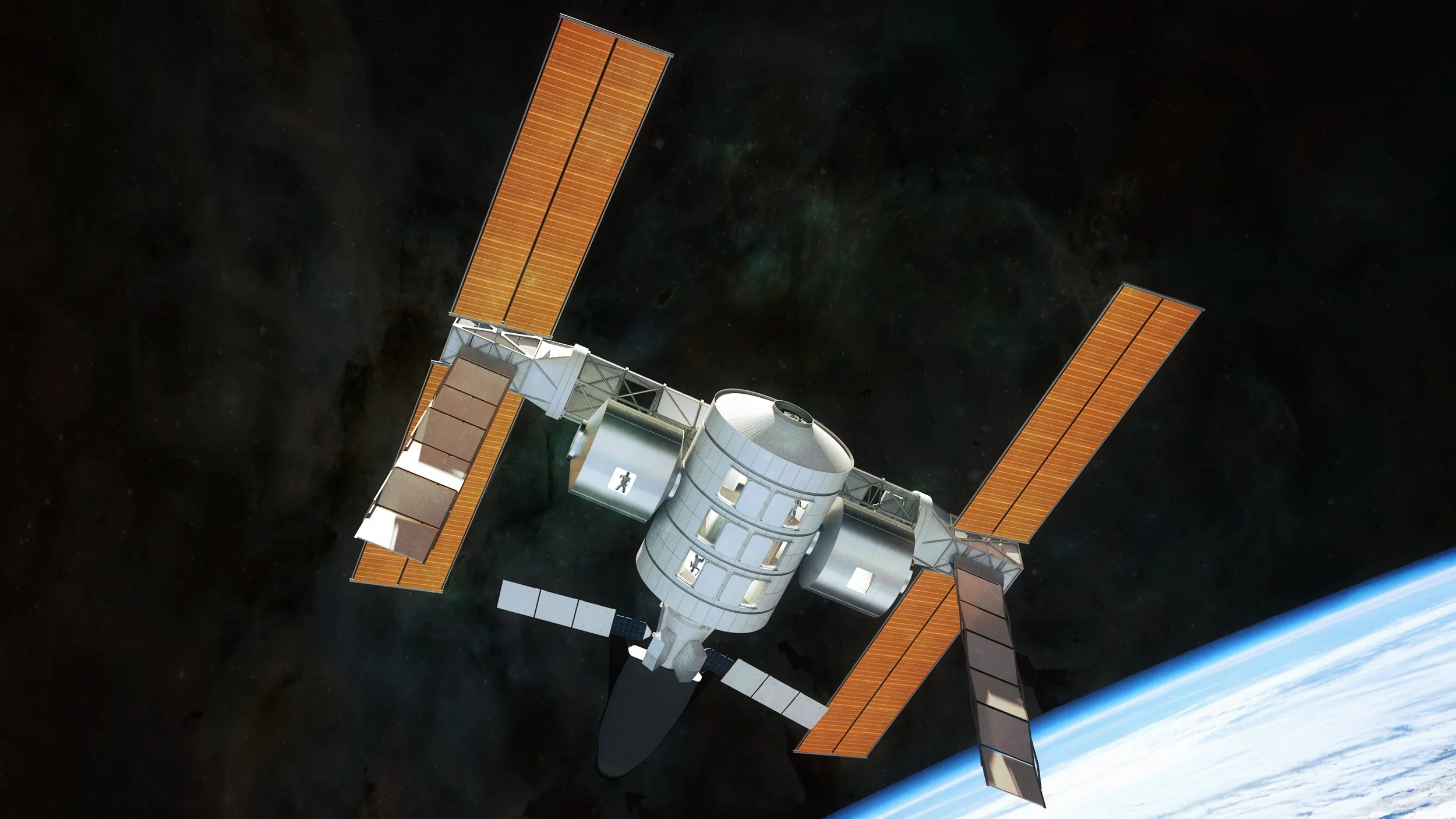
A space station module purpose-built for scientific research can be an anchor tenant of an eventual thriving commercial space station.
Programmatic zoning can separate work types, minimize cross-contamination risks, protect intellectual property, limit acoustic noise transmission, and support different work styles.