Need Fulfillment in Space Habitats
One of my first classes in the aerospace engineering program at CU Boulder was Space Habitat Design, taught by Dr. David Klaus, who’s retiring this year. This was the fall of 2020, the height of the pandemic. Everyone was masking and social distancing and disinfecting their produce. But I was sitting at my laptop in a hotel after my housing fell through, starting my first remote lecture of many over the next two years. Space Habitat Design is a core course in the bioastronautics curriculum, and despite starting the class with years of architecture experience, the idea of designing a habitat was something slightly foreign.
We don’t usually talk about buildings on Earth as habitats, not even housing, and that’s because four walls and a roof aren’t really enough. You still need, at minimum, outside air and water. We sometimes fall sideways into calling cities habitats, especially for birds or rats. But even then, most of the resources come from outside, not just air and water, but food, raw materials, power. Waste streams go elsewhere, away. When I was in architecture school, I had a professor who would say “there is no ‘away.’”
When designing a building, you generally start with the location, a site, and 100% of buildings benefit from being located in the Earth’s biosphere. It protects us against the vacuum and radiation environment of space. It sustains a temperature range where water is mostly liquid, enabling a complex ecosystem. The idea of a habitat implies everything you need to live is included, and on much of Earth you can get almost all the way there without building anything.
In space, that’s definitely not the case. At every location we currently imagine siting space habitats, the natural environment will kill you in a matter of minutes. So a permanent home in space really has to provide the protections and resources we take for granted on Earth.
What I learned from Dr. Klaus is that a space habitat designer’s job is to keep the crew alive, healthy, happy, and productive — a sort of Maslow’s Hierarchy of need fulfillment. But, of course, the real Maslow’s Hierarchy goes much further. Designing for esteem, belonging, and social connection, even self-actualization, can occur through simple moves, like sizing a dining area to accommodate the entire crew or including windows with a view of Earth. But in practice, when contending with the realities of space vehicle development, the inclusion of even a small window is never a foregone conclusion.
Realizing higher rungs of the hierarchy should become a priority as space becomes more accessible and more people go and stay longer. But as with architecture on Earth, I expect change will need to be motivated by a demand-side desire for better accommodations. Designers can start to move the needle by showing what’s possible with design ideas that are ambitious and forward-looking while demonstrating understanding of what’s feasible and what would most benefit future users.
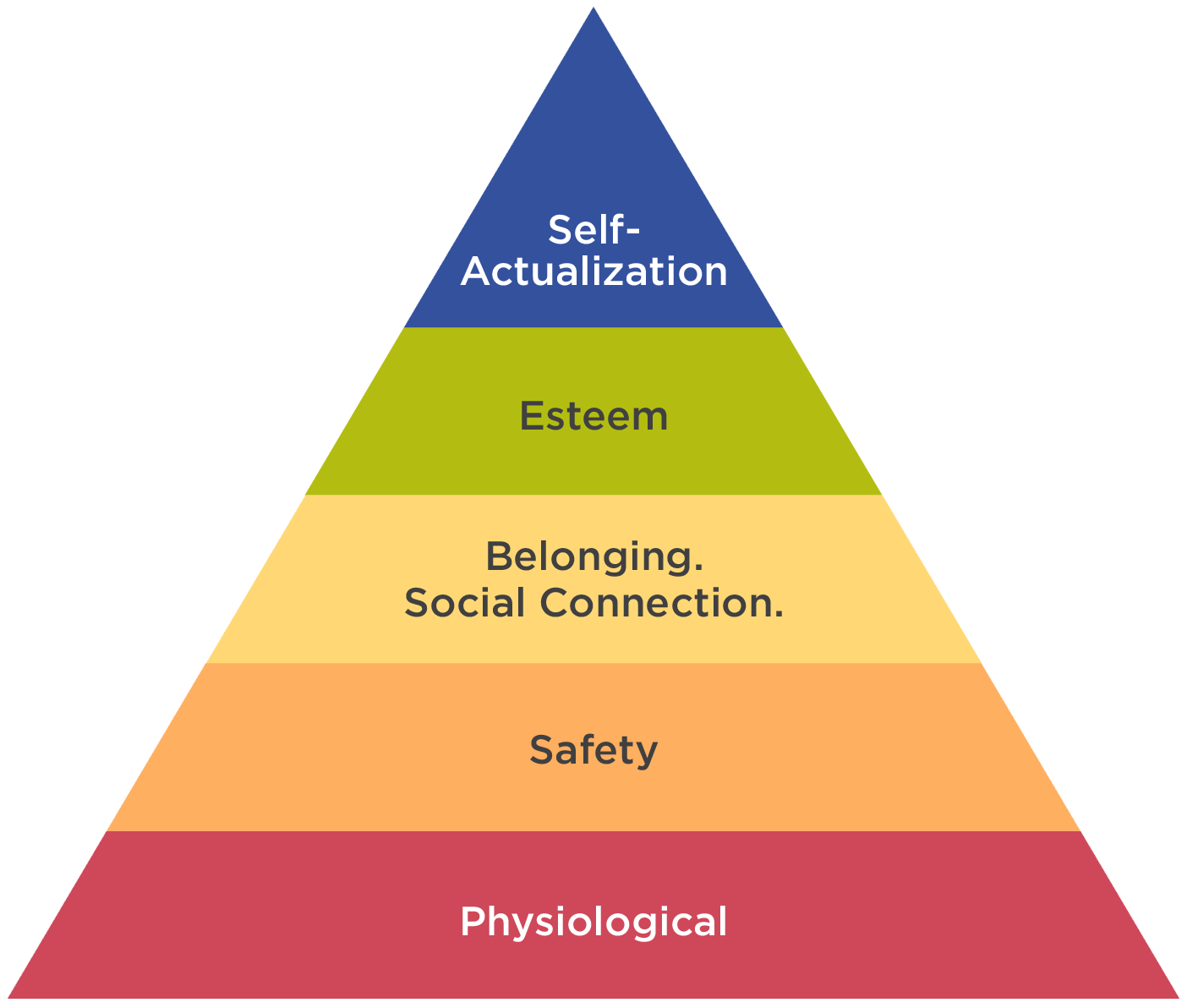
Maslow’s Hierarchy